
For many (starting) entrepreneurs, the terms debit and credit can be quite confusing at first. Yet they are essential for proper financial administration. They form the foundation of the Dutch accounting system and are crucial when preparing documents like the balance sheet, profit and loss statement, and annual report.
In this article, we’ll explain step by step what debit and credit mean, why they must always balance, and how you can recognize them in practice.
What are debit and credit?
In the Netherlands, the double-entry bookkeeping system is used. This means every financial transaction always results in two entries: one on the debit side and one on the credit side. This method is not only required for B.V.s under the Dutch Civil Code (Title 9, Book 2 BW) but is also recommended for other legal forms such as sole proprietorships and partnerships (VOFs), especially if you want to maintain a clear overview of your finances.
In simple terms:
-
Debit = where the money goes (assets or expenses)
-
Credit = where the money comes from (equity or liabilities)
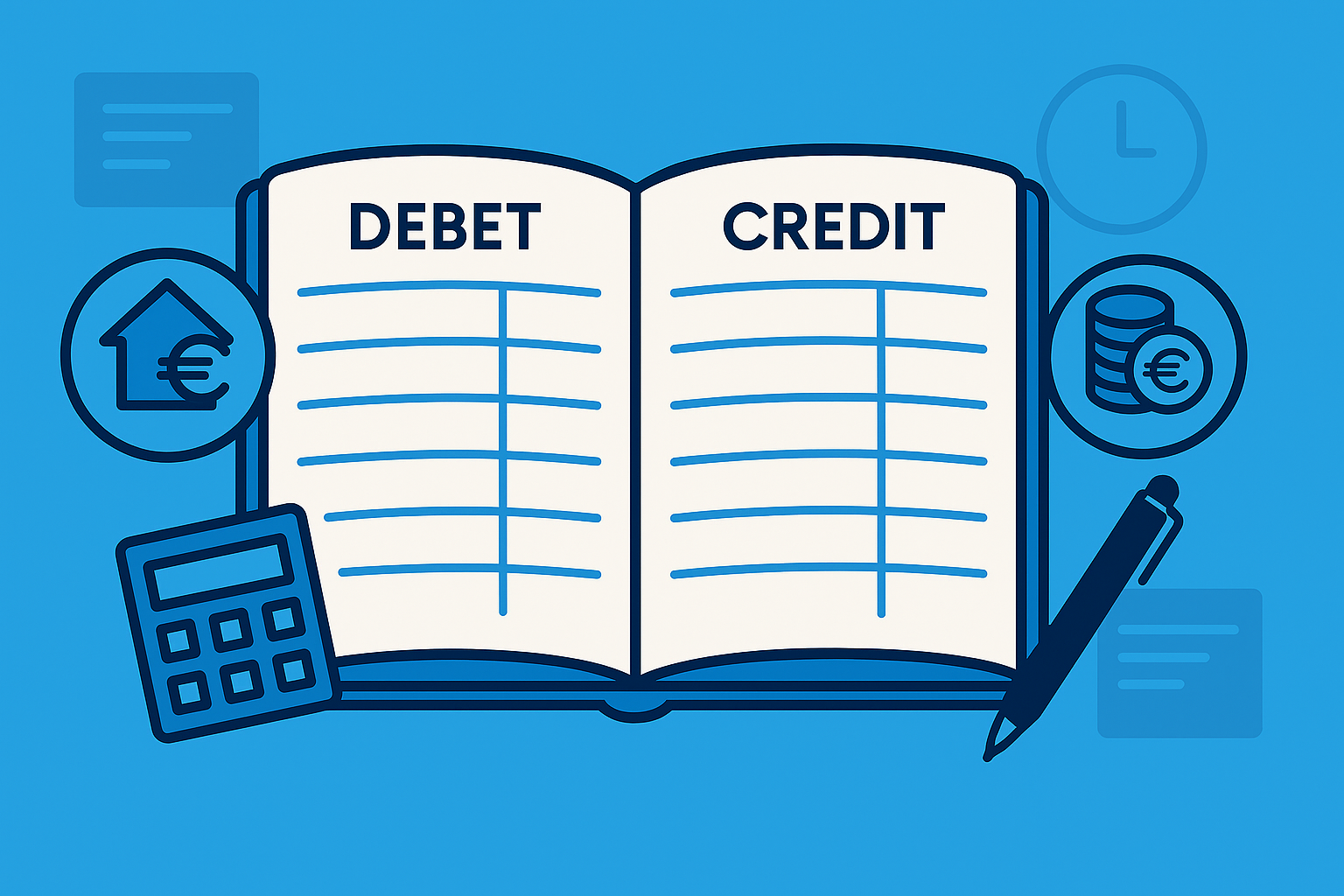
In your accounting, you’ll often see two columns: debit on the left and credit on the right. These must always balance. If they don’t, there’s an error in your entry or missing information. That’s why your financial overview is called a “balance sheet.”
What falls under debit?
Debit entries represent the company’s assets or expenses. These are things you’ve spent money on but received something in return for—either tangible or intangible.
Examples of debit entries:
-
Expenses: Office rent, supplier costs, subscriptions, and marketing expenses. Under Dutch tax law, only business-related expenses that demonstrably contribute to your company may be included.
-
Fixed assets: Long-term assets like company vehicles, machines, or office furniture. In the Netherlands, an item is typically considered a fixed asset if it costs €450 or more (excluding VAT).
-
Current assets: Assets that can be converted into cash within a year, such as inventory, accounts receivable (customers who still owe you money), and VAT receivable. Cash and bank balances also belong here.
Note: For income tax or corporate tax, a distinction is made between depreciable assets (like machinery) and costs that can be fully deducted in one year.
What falls under credit?
Credit entries show how the assets are financed. These can be debts, but also your own capital or retained profits.
Examples of credit entries:
-
Equity: The money you’ve invested in your business plus any profits not yet distributed. In a sole proprietorship, this is called “capital”; in a B.V., it’s “share capital.” If you’re just starting out, it’s important to understand how equity works and how to record it properly.
-
Short-term liabilities: Debts payable within 12 months, such as unpaid supplier invoices (accounts payable), taxes owed (like VAT or payroll taxes), and short-term loans.
-
Long-term liabilities: Debts with a term longer than one year, like business loans or mortgages. These must be listed on the balance sheet and usually accrue interest.
In the Netherlands, when preparing annual accounts (especially for B.V.s), you must comply with the guidelines from the Council for Annual Reporting (RJ) and, for medium and large companies, with the legal requirements of the Civil Code.
Why must debit and credit always balance?
A bookkeeping system must always balance. This is not only logical from a financial standpoint but also a legal requirement when filing with the Dutch Tax Authority or submitting annual reports to the Chamber of Commerce.
Example:
You buy a machine for €10,000.
-
Debit: The value of the machine increases (fixed assets +€10,000).
-
Credit: You either pay via your bank account (cash assets –€10,000) or take a loan (liabilities +€10,000).
In both cases, the balance remains even.
If you use accounting software (like Jortt, which Balancify integrates with), these double entries are processed automatically. You don’t need to adjust columns manually—but it’s still useful to understand the basics.
What does this mean in practice?
Most entrepreneurs don’t need to work manually with debit and credit entries. Modern accounting software handles this in the background. Still, understanding the concepts helps you communicate better with your accountant, spot errors faster, and be more confident during audits or when reviewing annual figures.
This knowledge also helps you:
-
Read your balance sheet and profit and loss statement.
-
Assess your liquidity and solvency.
-
Plan investments and optimize taxes.
Conclusion
Debit and credit form the foundation of your bookkeeping. They ensure your balance sheet is accurate, your financial data is clear, and your tax returns are filed correctly.
Still sounds complicated? Don’t worry—that’s exactly what Balancify is here for.
We make sure your bookkeeping always balances, your VAT and income tax returns are done correctly, and you never overpay the Tax Authority.
Get to know Balancify for free and discover how we make your financial administration simple, reliable, and affordable.

For many (starting) entrepreneurs, the terms debit and credit can be quite confusing at first. Yet they are essential for proper financial administration. They form the foundation of the Dutch accounting system and are crucial when preparing documents like the balance sheet, profit and loss statement, and annual report.
In this article, we’ll explain step by step what debit and credit mean, why they must always balance, and how you can recognize them in practice.
What are debit and credit?
In the Netherlands, the double-entry bookkeeping system is used. This means every financial transaction always results in two entries: one on the debit side and one on the credit side. This method is not only required for B.V.s under the Dutch Civil Code (Title 9, Book 2 BW) but is also recommended for other legal forms such as sole proprietorships and partnerships (VOFs), especially if you want to maintain a clear overview of your finances.
In simple terms:
-
Debit = where the money goes (assets or expenses)
-
Credit = where the money comes from (equity or liabilities)
In your accounting, you’ll often see two columns: debit on the left and credit on the right. These must always balance. If they don’t, there’s an error in your entry or missing information. That’s why your financial overview is called a “balance sheet.”
What falls under debit?
Debit entries represent the company’s assets or expenses. These are things you’ve spent money on but received something in return for—either tangible or intangible.
Examples of debit entries:
-
Expenses: Office rent, supplier costs, subscriptions, and marketing expenses. Under Dutch tax law, only business-related expenses that demonstrably contribute to your company may be included.
-
Fixed assets: Long-term assets like company vehicles, machines, or office furniture. In the Netherlands, an item is typically considered a fixed asset if it costs €450 or more (excluding VAT).
-
Current assets: Assets that can be converted into cash within a year, such as inventory, accounts receivable (customers who still owe you money), and VAT receivable. Cash and bank balances also belong here.
Note: For income tax or corporate tax, a distinction is made between depreciable assets (like machinery) and costs that can be fully deducted in one year.
What falls under credit?
Credit entries show how the assets are financed. These can be debts, but also your own capital or retained profits.
Examples of credit entries:
-
Equity: The money you’ve invested in your business plus any profits not yet distributed. In a sole proprietorship, this is called “capital”; in a B.V., it’s “share capital.” If you’re just starting out, it’s important to understand how equity works and how to record it properly.
-
Short-term liabilities: Debts payable within 12 months, such as unpaid supplier invoices (accounts payable), taxes owed (like VAT or payroll taxes), and short-term loans.
-
Long-term liabilities: Debts with a term longer than one year, like business loans or mortgages. These must be listed on the balance sheet and usually accrue interest.
In the Netherlands, when preparing annual accounts (especially for B.V.s), you must comply with the guidelines from the Council for Annual Reporting (RJ) and, for medium and large companies, with the legal requirements of the Civil Code.
Why must debit and credit always balance?
A bookkeeping system must always balance. This is not only logical from a financial standpoint but also a legal requirement when filing with the Dutch Tax Authority or submitting annual reports to the Chamber of Commerce.
Example:
You buy a machine for €10,000.
-
Debit: The value of the machine increases (fixed assets +€10,000).
-
Credit: You either pay via your bank account (cash assets –€10,000) or take a loan (liabilities +€10,000).
In both cases, the balance remains even.
If you use accounting software (like Jortt, which Balancify integrates with), these double entries are processed automatically. You don’t need to adjust columns manually—but it’s still useful to understand the basics.
What does this mean in practice?
Most entrepreneurs don’t need to work manually with debit and credit entries. Modern accounting software handles this in the background. Still, understanding the concepts helps you communicate better with your accountant, spot errors faster, and be more confident during audits or when reviewing annual figures.
This knowledge also helps you:
-
Read your balance sheet and profit and loss statement.
-
Assess your liquidity and solvency.
-
Plan investments and optimize taxes.
Conclusion
Debit and credit form the foundation of your bookkeeping. They ensure your balance sheet is accurate, your financial data is clear, and your tax returns are filed correctly.
Still sounds complicated? Don’t worry—that’s exactly what Balancify is here for.
We make sure your bookkeeping always balances, your VAT and income tax returns are done correctly, and you never overpay the Tax Authority.
Get to know Balancify for free and discover how we make your financial administration simple, reliable, and affordable.